
Table of Contents
- 1 How do I convert from a chlorine pool to a saltwater pool?
- 2 What You Need Before You Start
- 3 Step 1: Choose and Size Your Salt Chlorine Generator
- 4 Step 2: Have the Generator Installed
- 5 Step 3: Add Pool-Grade Salt
- 6 Step 4: Balance Water Chemistry Before Turning On the Cell
- 7 Step 5: Turn On the Cell and Set Chlorine Output
- 8 What Does It Cost to Convert to Saltwater?
- 9 Frequently Asked Questions About Saltwater Swimming Pools
- 9.1 How long does it take to convert a chlorine pool to saltwater?
- 9.2 How much salt does it take to convert a pool to saltwater?
- 9.3 Can I convert my existing pool to saltwater, or do I need a new pool?
- 9.4 Do I still need to add chlorine to a saltwater pool?
- 9.5 Is it difficult to maintain a saltwater pool after conversion?
- 10 Connecticut-Specific Notes for Salt Pool Owners
Converting a chlorine pool to saltwater is a fairly simple, straightforward process.
How do I convert from a chlorine pool to a saltwater pool?
Short answer: Converting a chlorine pool to saltwater is a fairly simple, straightforward process. To convert a chlorine pool to saltwater, a salt chlorine generator is installed on the pool’s return line, pool-grade salt is added to the water, the water chemistry is balanced, and the generator is turned on to produce chlorine. Most inground pool conversions can be completed in one day, with the system producing chlorine within 24–48 hours.
Here is the step-by-step process we use for saltwater pool conversions in Connecticut.
Before you begin, gather a few details about your pool and equipment so the salt system can be sized and installed properly.
What You Need Before You Start
Before converting your pool to saltwater, you need three things: your pool volume, confirmation that your equipment is compatible, and a current water chemistry reading.
1. Know your pool’s volume in gallons
Your pool volume determines the size of the salt chlorine generator and how much salt to add.
Use this standard formula to calculate pool volume:
Length x Width x Average Depth x 7.5 = Pool Volume (in gallons)
This formula comes from the fact that one cubic foot of water holds about 7.48 gallons, which is commonly rounded to 7.5 for pool calculations.
If you do not know your pool volume, measure the shallow end and deep end, find the average depth, and use that number in the formula.
2. Check equipment compatibility
Most modern pool equipment can handle saltwater systems, but salt can accelerate corrosion in some metals and older components. Ladders, handrails, light fixtures, and certain heaters should be approved for use in saltwater.
If you are not sure whether your equipment is compatible, your swimming pool technician will check that before installing a salt system to help prevent problems later.
3. Check current water chemistry
Before converting to saltwater, the pool water should already be balanced. Balanced water helps protect the salt cell and improves the system’s chances of starting up correctly.
Typical startup ranges for a saltwater pool are:
- pH: 7.2 to 7.8 (ideal 7.4 to 7.6)
- Total Alkalinity: 80 to 120 ppm
- Calcium Hardness: 200 to 400 ppm
These ranges align with common manufacturer and industry guidance for saltwater pool operation. If your chemistry falls outside these ranges, adjust the water before adding salt and starting the system.
Step 1: Choose and Size Your Salt Chlorine Generator
A good rule is to size the generator for at least 1.5 to 2 times your pool’s actual volume. This allows the system to produce enough chlorine without running at full output all the time, which helps extend the life of the salt cell and maintain more consistent chlorine levels.
The Swimming Pool Store carries salt chlorine generators from manufacturers such as Hayward, Pentair, and Jandy. The right unit depends on your pool size, plumbing configuration, and existing equipment.
In most cases, a salt chlorine generator system for an inground pool costs between $800 and $3,500, depending on pool size and the system selected. Once the generator is properly sized and selected, the next step is installation.
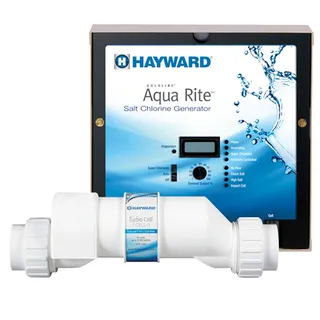
Step 2: Have the Generator Installed
The salt chlorine generator is installed directly into your pool’s plumbing system, usually on the return line after the filter and heater. This placement allows clean, filtered water to pass through the salt cell before returning to the pool. This helps protect the cell and improves chlorine production.
Some homeowners ask about installing a salt system themselves, but this is usually not a DIY project. The system must be installed in the correct location in the plumbing line, wired correctly, and set up properly to avoid damaging the cell or voiding the manufacturer’s warranty.
Improper installation is a common cause of salt system problems.
Installation typically takes 2 to 4 hours for most inground pools, depending on the equipment layout and electrical setup.
In most cases, the salt generator will begin producing chlorine within about 24 hours after the salt has fully dissolved, the salt level has been confirmed, and the water chemistry has been balanced.
The Swimming Pool Store installs salt chlorine generators throughout Connecticut. If you are converting from chlorine to salt, we can size and install the system so it runs efficiently from the start.

Step 3: Add Pool-Grade Salt
Once the generator is installed, the next step is adding pool-grade salt to the water. Saltwater pools use sodium chloride (NaCl) that is at least 99 percent pure and sold as pool salt. Do not use table salt, rock salt, or water softener salt with additives, as these can stain the pool or damage equipment.
Most salt chlorine generators operate best at a salt level between 2,700 and 3,500 parts per million (ppm), with many systems targeting around 3,000 to 3,200 ppm. Always check the manufacturer’s recommended salt level for the specific system being installed.
If you are starting from zero salt, a general rule is that it takes about 200 to 250 pounds of salt per 10,000 gallons of pool water to reach the correct salt level. The exact amount depends on your pool size and the salt level recommended by the generator manufacturer.
Salt should be added by spreading it across the pool surface or around the perimeter while the pump is running. After adding salt, run the circulation system for 24 to 48 hours to allow the salt to fully dissolve and mix evenly throughout the pool before turning on the salt generator.
Do not turn on the salt cell until the salt is fully dissolved and the salt level has been tested, or the cell can be damaged. Once the salt has dissolved and the level is confirmed, the next step is to balance the water chemistry before turning the system on.

Step 4: Balance Water Chemistry Before Turning On the Cell
After the salt has fully dissolved and circulated, test and balance the water before turning on the salt chlorine generator. Starting the system with unbalanced water can shorten the life of salt cells and make chlorine levels harder to maintain.
Once the salt has dissolved, test and adjust the water to these general ranges:
- pH: 7.4 to 7.6
- Total Alkalinity: 80 to 120 ppm
- Calcium Hardness: 200 to 400 ppm
- Cyanuric Acid (Stabilizer): 60 to 80 ppm
Stabilizer is especially important for saltwater pools because the chlorine produced by the salt cell is unstabilized and can break down quickly in sunlight if cyanuric acid levels are too low. Maintaining the proper stabilizer level helps the system maintain a consistent chlorine level and reduces the load on the salt cell.
If you are not sure whether your water is balanced correctly, The Swimming Pool Store offers free water testing at our Burlington store. Bring in a water sample, and we will tell you what needs to be adjusted before starting the system. Once the salt level and water chemistry are balanced, the system is ready to be turned on.
Step 5: Turn On the Cell and Set Chlorine Output
After the water chemistry is balanced and the salt level is confirmed, the salt chlorine generator can be turned on. Most systems let you adjust chlorine output as a percentage of production.
A good starting point is to set the system to about 50 percent output, then test the free chlorine level after 24 hours. The typical target range for free chlorine in a residential pool is from 1 to 3 ppm.
If the chlorine level is too low, increase the output percentage. If the chlorine level is too high, decrease the output. Once the correct setting is found, the system will maintain the chlorine level automatically as long as the pump is running.
Once the system is running and adjusted correctly, the pool will maintain its chlorine level automatically throughout the swimming season.
What Does It Cost to Convert to Saltwater?
The cost to convert a chlorine pool to saltwater depends mainly on the pool size and the installed salt chlorine generator system, but most conversions fall within a fairly predictable range.
Here is a typical cost breakdown for converting an inground pool to saltwater:
- Salt chlorine generator system: $800 – $3,500
- Installation labor: $300 – $800
- Initial salt fill: $50 – $150, depending on pool size
- Water balancing chemicals: $50 – $150 (if needed)
Total first-year conversion cost: Typically, $1,900 – $4,500 for most inground pools.
After the first year, ongoing costs are relatively low. Most salt pool owners spend approximately:
- Salt: $50 – $100 per year
- Occasional balancing chemicals: varies by pool
- Salt cell replacement: $300 – $700 every 3–7 years
For comparison, many chlorine pool owners spend roughly $250 – $500 per year on chlorine and sanitizing chemicals, but do not have the upfront equipment cost. Over time, the operating cost of a salt pool is often similar to or slightly lower than that of a traditional chlorine pool, depending on how the pool is used and maintained.
The biggest cost difference is that salt pools have a higher upfront equipment cost, while chlorine pools have ongoing chemical costs year after year. If you’re still deciding whether converting makes sense for your pool, you can read more about the pros and cons in our article, Should I convert to a Saltwater Swimming Pool?
Frequently Asked Questions About Saltwater Swimming Pools

How long does it take to convert a chlorine pool to saltwater?
Most chlorine-to-salt conversions can be completed in one day. After the salt chlorine generator is installed and the salt is added, it usually takes 24–48 hours for the salt to fully dissolve and for the system to begin producing chlorine. Once the system is running and the chlorine output is adjusted, the pool can be maintained just like any other pool.
How much salt does it take to convert a pool to saltwater?
Most saltwater pools require a salt level between 2,700 and 3,500 ppm. For most pools starting from zero salt, this usually means adding about 200–250 pounds of pool salt per 10,000 gallons of water, but the exact amount depends on the pool size and the salt level required by the generator manufacturer. A salt chlorine generator uses dissolved salt in the pool water to produce chlorine automatically. If you want to understand the process in more detail, you can read our guide on How Do Salt Water Pool Systems Work?
Can I convert my existing pool to saltwater, or do I need a new pool?
Most existing inground chlorine pools can be converted to saltwater as long as the equipment is in good condition and compatible with saltwater. The conversion involves adding a salt chlorine generator and salt to the existing pool water — the pool structure itself does not need to be changed.
Do I still need to add chlorine to a saltwater pool?
A saltwater pool still uses chlorine, but a salt chlorine generator produces it automatically from the salt in the water. During cold water temperatures (under 60°F), heavy pool use, or when opening the pool in the spring, a small amount of chlorine may still need to be added manually until the generator is producing enough chlorine on its own.
Is it difficult to maintain a saltwater pool after conversion?
Saltwater pools are generally easy to maintain, but the water still needs to be tested and balanced regularly. The main difference is that the salt chlorine generator produces chlorine automatically, so you do not need to add chlorine manually as often. The salt level, pH, and stabilizer still need to be checked periodically to keep the system running correctly.
Connecticut-Specific Notes for Salt Pool Owners
If you live in Connecticut, keep these factors in mind when converting to a saltwater pool.
Optimal conversion period: Spring is the ideal time for conversion, as it coincides with pool opening and water chemistry balancing. This gives the system the entire swimming season to run and makes startup easier.
Chilly water and salt systems: Salt chlorine generators stop producing chlorine when water temperatures drop below about 60°F. In New England weather and areas with distinct seasonal changes, a salt system will not generate chlorine during early spring openings or late fall when the water is cold. During those times, chlorine may still need to be added manually until the water warms up and the generator starts producing again.
Winterizing a salt system: When closing a saltwater pool for winter:
- Turn off the salt cell before the water temperature drops below 60°F
- Follow the manufacturer’s winterizing instructions
- In some cases, remove the salt cell and store it for the winter
Water hardness in Connecticut: It varies across the state depending on whether the home uses municipal or well water. Calcium hardness should be tested before converting to saltwater because high calcium levels can cause scale buildup on the salt cell over time. This is something we check when installing salt systems.
For more than 55 years, The Swimming Pool Store has helped Connecticut pool owners upgrade, maintain, and repair their pools with the right equipment and experienced service support. Our team installs salt chlorine generators, balances water chemistry, and makes sure your system is set up correctly from the start. If you’re thinking about converting your pool, we can help you choose the right system and install it properly. Learn more about Saltwater Swimming Pools.
The Swimming Pool Store installs salt chlorine generators and helps pool owners throughout Connecticut choose the right system for their pool and equipment. If you are ready to convert your pool or want help choosing a system, call (860) 673-6118 or visit our store at 221 Spielman Hwy, Burlington, CT.


